

What Happens If I Get a Second DUI in Arizona: Penalties, Jail Time, and License Consequences
A second DUI in Arizona brings some of the toughest repeat-offense penalties in the country. The state treats a repeat arrest as a sign of a pattern. Judges have little room to go easy once a conviction is on the table.
If you get a second DUI in Arizona within 84 months of your first, you face at least 90 days in jail (with 30 days served in a row), more than $3,000 in fines and fees, a one-year license revocation, and at least 12 months with an ignition interlock device. Higher blood alcohol levels push those numbers even higher. Knowing the rules early helps you protect your license and make smart choices about your defense.
The Main Points to Know
A second DUI within seven years is a Class 1 misdemeanor in Arizona, but it carries far more weight than a first offense. Here is what stands out:
- Jail is mandatory. A standard second DUI calls for at least 90 days, and part of it may be suspended after you finish alcohol treatment.
- Costs climb fast. Fines, surcharges, and court costs often pass $4,000, and that's before interlock, insurance, and class fees.
- Your license has two separate threats. The MVD acts on its own, apart from the criminal court. Even a reduced charge does not stop MVD penalties.
- Screening and treatment are required. Courts order alcohol screening and follow-up classes for every second offense.
- Early legal help counts. A Mesa DUI Lawyer DUI or criminal defense attorney can step in before key deadlines pass.
What Counts as a Second Offense Under Arizona Law

Your new arrest counts as a second DUI within 84 months if your earlier offense happened in the past seven years. Arizona uses this look-back window under A.R.S. 28-1381 and 28-1382.
The clock runs from offense date to offense date. Conviction dates don't matter. So if your first case took two years to close, the seven years still started on the day of that first arrest.
Out-of-state convictions count too, as long as the conduct matches Arizona's DUI law. A first case settled through a plea can also count as a prior for sentencing.
Arizona sorts DUIs by blood alcohol level:
|
Charge type |
BAC level |
Main statute |
|---|---|---|
|
Regular DUI |
Under 0.15% (or impaired to the slightest degree) |
A.R.S. 28-1381 |
|
Extreme DUI |
0.15% to 0.199% |
A.R.S. 28-1382 |
|
Super extreme DUI |
0.20% or higher |
A.R.S. 28-1382 |
|
Aggravated DUI |
Felony factors present |
A.R.S. 28-1383 |
A second DUI within seven years at an extreme level brings much harsher terms. Our extreme DUI defense practice handles these higher-BAC charges often, since they come with stiffer jail minimums.
Jail, Fines, and Court-Ordered Penalties

Mandatory jail time is the heaviest part of a second DUI sentence. Prosecutors see a repeat case as a likely substance problem, so the court adds treatment and close supervision on top of punishment.
For a second standard DUI, expect:
- 90 days in jail, with at least 30 days served back to back. The court can suspend up to 60 days if you finish alcohol screening and treatment.
- Fines of $3,000 or more, which grow past $4,000 once surcharges and assessments land.
- Community service, at least 30 hours in many courts.
- Probation of up to five years, with random alcohol testing.
- DUI school and an alcohol screening by a state-approved provider.
Jail and fines rise sharply by BAC level:
|
Offense |
Minimum jail |
Approximate fines and fees |
|---|---|---|
|
Second standard DUI |
90 days (30 straight) |
$3,000+ |
|
Second extreme DUI |
120 days |
$3,250+ |
|
Second super extreme DUI |
180 days |
$3,750+ |
Under A.R.S. 28-1382, a second extreme DUI leaves less room for suspended days. The super extreme DUI cases our team has handled show how quickly totals grow at 0.20% and above.
Some facts turn the charge into a felony. Driving on a suspended license or having a child under 15 in the car can lead to aggravated DUI charges, which carry prison time.
Losing Your License and Dealing With the MVD

A second conviction within 84 months brings a one-year license revocation from Arizona's Motor Vehicle Division. A first offense, by comparison, leads to a 90-day suspension.
The MVD moves on its own timeline. If a breath or blood test shows you over the limit, the officer can serve you an administrative suspension notice at the time of arrest. That happens before your criminal case ever reaches a judge.
You have 15 days from that notice to request an MVD hearing. Miss that window and the suspension starts automatically. In practice, many people lose this fight simply because they wait too long to call a lawyer.
After serving part of the revocation and meeting MVD conditions, you may qualify for a special ignition interlock restricted license. This special ignition interlock restricted driver license lets you drive with an interlock installed while the rest of the term runs. Our suspended license DUI practice helps drivers work through these steps and avoid new charges.
Interlock Rules After a Repeat Conviction
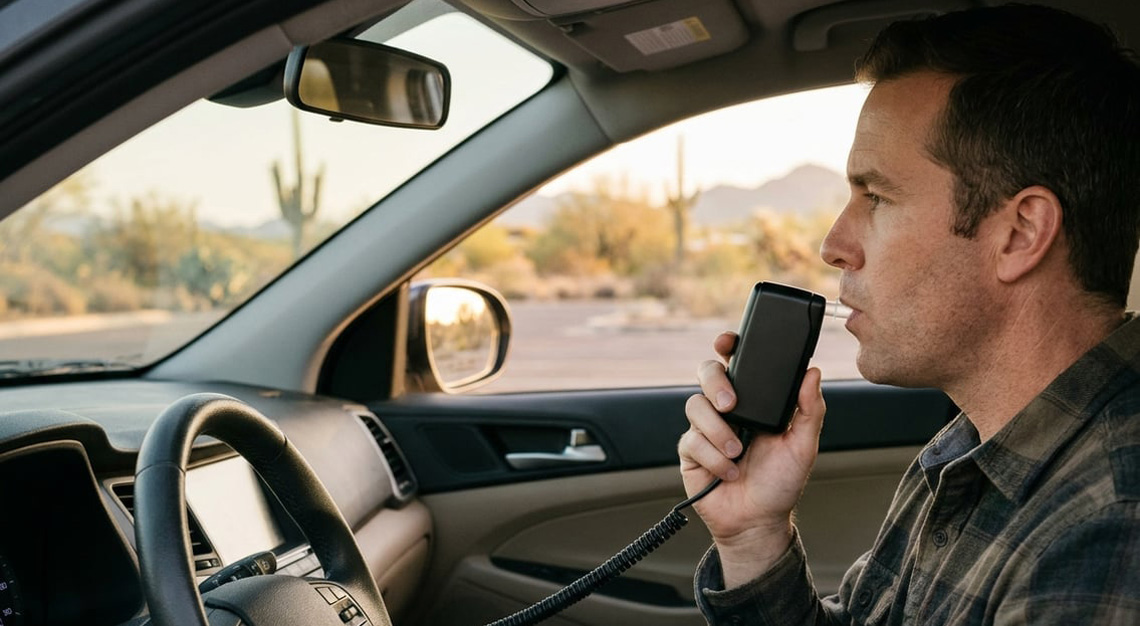
You must install an ignition interlock device on every vehicle you drive for at least 12 months after your license comes back. Extreme and super extreme cases can push that to 18 or 24 months.
The device works like a breathalyzer wired to your ignition. You blow into it before the car starts. It also asks for random "rolling" samples while you drive.
Plan for these costs:
- Installation fees
- Monthly monitoring, around $80 to $150
- Calibration visits
- Removal fees at the end
Yearly totals often top $2,500.
Breaking ignition interlock requirements extends your term. Missed tests, skipped calibration, or a failed sample can all delay full reinstatement. Tampering can lead to new criminal charges.
Breath and Blood Tests, Refusals, and Implied Consent

By driving in Arizona, you agree to a chemical test if police lawfully arrest you for DUI. This implied consent law covers breath, blood, and urine tests used to measure your blood alcohol concentration.
Refusing on a second arrest within 84 months triggers a two-year license suspension. That is longer than the penalty for failing the test. Arizona offers no work permit during a refusal suspension.
A refusal rarely keeps you from being tested. Officers often get a telephonic warrant and draw blood anyway. Prosecutors can also tell the jury you refused.
The refusal suspension has its own MVD hearing and deadlines, apart from your criminal case. A defense attorney can still challenge whether the stop, arrest, and testing followed the law.
Ways a Repeat Conviction Changes Daily Life
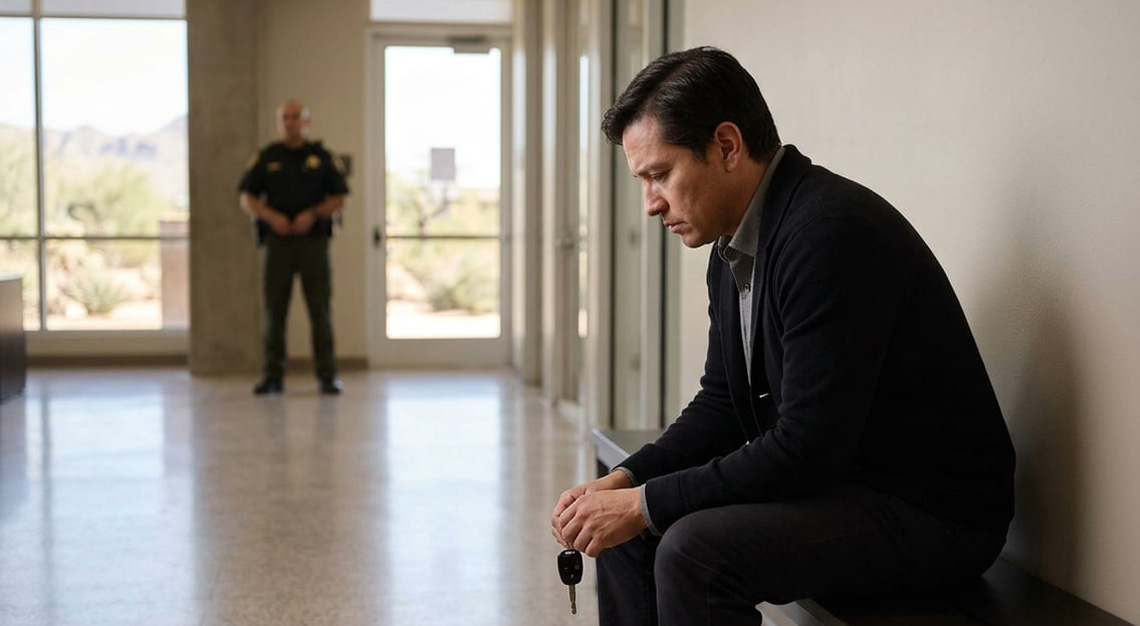
A second DUI conviction affects your job, your money, and your record long after jail ends.
Work: Jobs that need driving become hard to keep during revocation. CDL holders face disqualification. Nurses, teachers, and finance workers may need to report to their licensing boards.
Money: Insurance rates can jump 300% to 500%. You'll need an SR-22 filing for three years. Add treatment, classes, and interlock fees, and the real cost often lands well past the court fines.
Treatment: Courts may order DUI classes, a victim impact panel, and support meetings. Repeat offenders spend more time in these programs than first-time offenders.
Immigration and background checks: Non-citizens can face trouble with visas, green cards, and citizenship. The conviction also shows up in housing and loan checks for years.
Building a Defense Against a Second DUI

An arrest is the start of a case, and many second DUI charges have weak spots a lawyer can attack. Common DUI defenses include:
- The stop: Did the officer have reasonable suspicion to pull you over?
- The arrest: Was there probable cause?
- The tests: Was the breath machine calibrated? Was the blood sample handled properly?
- Field sobriety tests: Were they given correctly, on level ground, with clear instructions? A poorly run field sobriety test is easy to question.
- The prior: Does the first offense fall inside the 84-month window? Does an out-of-state case match Arizona law?
If the prior doesn't qualify, the case may drop to a first offense. In plea negotiations, a lawyer may also push for a lesser charge such as reckless driving. The results in past DUI cases show how much the details matter in each file.
Steps you take now help too. Enrolling in treatment, using alcohol monitoring, and gathering character letters show the court you're taking responsibility. Mandatory minimums still apply, but good negotiation can shape how your sentence is served.
Our second and third DUI defense team reviews each of these issues from day one.
Wrapping Up
A second DUI in Arizona means mandatory jail, thousands in costs, a one-year revocation, and at least a year of interlock use. Extreme BAC levels and felony factors raise the stakes further. The MVD deadline is short, and a strong defense depends on early action.
Common Questions About a Repeat Arizona DUI
What separates a second DUI from a first one?
A first DUI carries at least 10 days in jail, with most days suspendable. A second DUI within seven years jumps to 90 days, with 30 served in a row.
Fines rise, the license loss grows from 90 days to a full year, and interlock rules get stricter. Judges can't go below these minimums.
A second conviction also sets up felony exposure. A third DUI within 84 months becomes aggravated DUI, which means prison.
Can two open DUI cases both count as first offenses?
That depends on the order of arrests and convictions. Once you're convicted in the first case, prosecutors can charge the later case as a second offense with higher penalties.
Timing becomes a key part of strategy. Talk with a lawyer privately before making any plea in either case.
Does a second conviction mean I'll lose my job?
Arizona law doesn't require your employer to fire you. Your job risk depends on company policy and whether your role needs driving or a clean record.
Workers in transportation, healthcare, and licensed fields may have to report the conviction. Share these concerns with your lawyer so they can factor into plea talks.
Can I stay out of jail on a second DUI?
Avoiding jail entirely is rare once you're convicted. Arizona's minimums are firm.
You can shorten the time, though. Finishing treatment can suspend up to 60 of the 90 days for a standard case. Some courts allow home detention for part of the term after you serve a set number of days in jail.
When should I call a lawyer after a second arrest?
Call within a few days. The 15-day MVD hearing deadline starts on the day you're served notice.
Early help also protects evidence like dashcam video and test records. A lawyer can guide you on what not to say, help you follow release terms, and start alcohol screening that can help at sentencing. Knowing how to find the best DUI lawyer in Arizona helps you choose quickly.
How Mesa DUI Lawyer Can Help With Your Second DUI
Mesa DUI Lawyer gives you a DUI defense lawyer who handles both your criminal case and your MVD hearing at the same time. That matters because each one runs on its own schedule.
Our team reviews police reports, dashcam footage, test results, and prior records to find errors. We also guide you through treatment and other steps that can improve how the court sees you.
If you're facing a second DUI charge, or worried a new arrest will count as one, reach out before the 15-day window closes. Call Mesa DUI Lawyer's criminal defense team at (480) 660-2676 to schedule a confidential consultation.


